Build Strong Communication with Your Child Today
Learn simple ways to build strong communication with your child. Discover practical tips for modern parents to listen, connect, understand, and support them.
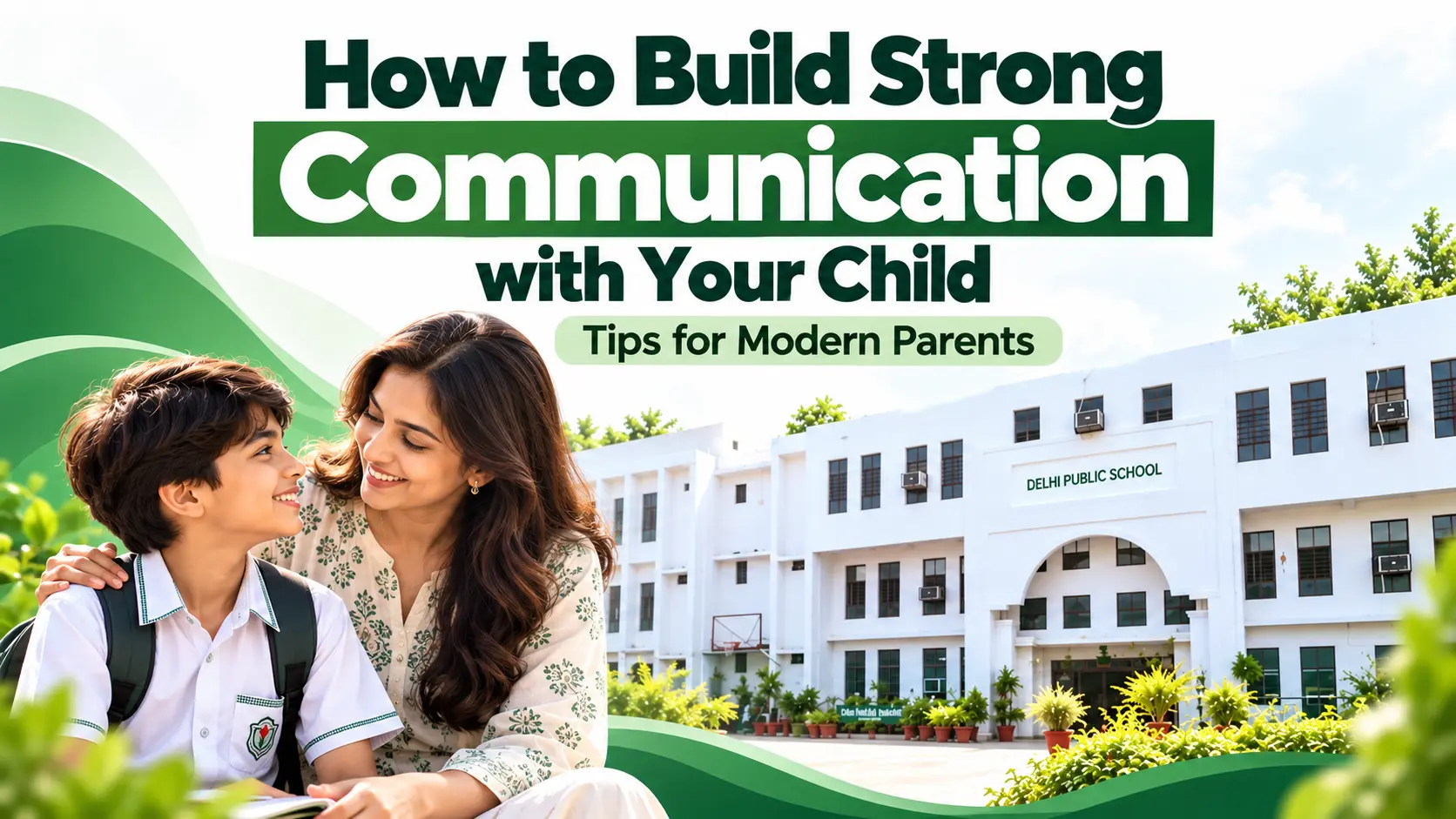
How to Build Strong Communication with Your Child: Tips for Modern Parents
Strong communication between parents and children is built through small, consistent habits. Most families never think to name or practice them deliberately. So, here we have put them together from child development research and practical experience to give modern parents concrete, usable strategies for raising children who talk to them openly, honestly and often. Most parents discover the communication gap the same way. The child is eight or nine, maybe ten and a parent asks how school was. The answer is "fine." They ask what happened today. "Nothing." They then ask if everything is okay and end up hearing a simple "Yes." And somewhere in the silence that follows, the parent realises that the easy, open conversation they had with their four-year-old has become something that requires effort to access. This does not happen because children stop wanting to talk to their parents. It happens because the habits that keep that channel open were never deliberately built. It could also be that the habits that close it were never deliberately avoided. This blog is about building those habits early and maintaining them through the years when they matter most. Some children are naturally talkative and some are naturally reserved and neither is a problem. Communication is not about volume (more or less). It is rather about if a child feels safe bringing the real things to the people who love them. It could be: the confusing things the embarrassing things the frightening things the curious questions or anything and everything they wish to That safety is built. It does not arrive automatically with the parent-child relationship. And it can be eroded, gradually and without anyone meaning to erode it, through patterns that become habitual before anyone notices them. A child who has been interrupted repeatedly learns that their thoughts are not worth hearing to the end A child whose disclosures have been met with immediate problem-solving learns that sharing a feeling triggers a lecture, not a conversation A child who has been dismissed, not cruelly, just busily, learns that certain topics do not land well and stops bringing them A child who has only ever been asked about achievements and performance learns that other parts of their inner life are not on the table None of this requires a parent to have done anything wrong. It simply requires not having done the things that keep the channel open. If you have been looking for tried and tested tips that can help strengthen bonds, here are seven ways: This is the most important communication skill. Parents need to develop it and it is also the hardest because most of us unknowingly do the contrary. When a child is talking, the adult brain typically runs two processes simultaneously: taking in what is being said preparing a response The preparing-a-response process is where most communication goes wrong. The response is often already formed before the child has finished speaking. The result is that children feel half-heard even when a parent is physically present and apparently paying attention. What listening to understand actually looks like: Letting the child finish, completely, before forming any response Reflecting back what you heard before adding anything: "so what I'm hearing is that you felt left out when they didn't choose you, is that right?" Asking one follow-up question rather than offering a solution: "what was the hardest part of that for you?" Tolerating silence after the child finishes, because the first thing a child says is often not the thing they actually want to say Research by developmental psychologist Gordon Neufeld suggests that children disclose in layers and that the most important disclosure is rarely the first one. The parent who waits, reflects and asks one more question consistently hears more than the parent who responds quickly and thoroughly to the first layer. Direct conversations about feelings and experiences are valuable. They are also relatively rare, because children, particularly older ones, rarely initiate them on demand. What reliably produces communication is a set of conditions where conversation happens naturally, without the weight of a dedicated "let's talk" moment. Side-by-side activities are among the most productive communication environments for children. Driving somewhere, cooking together, drawing side by side, playing a game. The absence of face-to-face eye contact paradoxically reduces the pressure of disclosure and produces more honest conversation Consistent, small rituals create predictable opening moments. A ten-minute conversation before bed, a morning routine with no screens, a weekend walk. The ritual matters less than the consistency. Children begin to use these moments because they know the space will be there Being visibly available without demanding engagement. A parent reading nearby is more communicatively available than a parent who sits down and asks "so, how are you really feeling?" Children come to available parents. They retreat from interrogating ones "How was school?" is not a bad question. It is just an exhausted one and children's brains have learned to answer it on autopilot. Better questions are specific, curious and open enough that they cannot be answered with a single word. The specificity signals genuine interest. A child who is asked what the most boring part of their day was knows that the parent actually wants to know something, not just perform the ritual of asking. This one is uncomfortable, but it is the most honest thing on this list. Children learn very quickly which disclosures produce which parental reactions. A child who tells a parent they got into a fight and watches the parent's face shift into alarm, followed by an interrogation about what happened and a lengthy discussion of conflict resolution, makes a quiet mental note. Next fight, maybe keep it to myself. A child who tells a parent something embarrassing and gets laughed at, even gently, files that away too. A child who shares a worry and watches the parent become visibly anxious learns that their worries create problems for the people they love and begins to curate what they share. What this requires in practice: A conscious pause before responding to any disclosure that triggers an emotional reaction A brief internal question: what does my child need right now, to be heard, or to be helped? Allowing yourself to say "thank you for telling me that" before doing anything else Being honest when you need a moment: "I want to talk about this properly. Can we sit down after dinner?" The goal is not to be emotionless. It is to be regulated enough that your reaction does not become the primary event. This is the communication strategy parents most consistently overlook. Children learn how to communicate by watching adults communicate. A parent who talks about their own day and their own frustrations is modelling exactly the kind of openness they are trying to cultivate in their child. This does not mean processing adult burdens with a child. It means being genuinely present in conversation rather than positioning yourself only as the listener. "I had a frustrating meeting today and I'm still trying to figure out why it bothered me so much" "I made a mistake at work and I had to apologise. It was uncomfortable but I felt better after" "I'm not sure what I think about that yet. Give me a minute" A child who hears a parent navigate uncertainty, admit mistakes and express emotions without catastrophising learns that this is what adults do. That normalisation matters enormously when the child has their own uncertainty, mistakes and emotions to navigate. The moments that most determine communication trust are not the easy ones. They are the moments when a child says something that makes a parent want to end the conversation: an admission of something they did wrong, a worry that sounds serious or a feeling that is uncomfortable to hear. Staying present in those moments is the single most powerful trust-building act a parent can perform. A child who tells a parent they cheated on a test and then they are met with genuine curiosity, "that doesn't sound like you, what was going on?", before any judgment, is a child who will tell that parent harder things in the future A child who discloses something frightening and watches the parent stay calm, take it seriously and respond thoughtfully, learns that their parents can handle the real things A child who is met with a lecture at the first sign of a difficult disclosure learns to manage what information reaches their parents The school environment plays a role here too. At DPS Indira Nagar, we have noticed that children from families where communication is genuinely open tend to advocate for themselves more effectively in school settings, ask for help when they need it and recover from social difficulties with more confidence. The communication patterns built at home show up in every environment a child enters. Every parent gets it wrong sometimes. The snapped response after a long day. The half-listening while scrolling. The reaction that was bigger than the moment deserved. What determines communication trust over years is not whether these moments happen. It is what happens after them. A parent who returns to a difficult moment and says "I didn't handle that well earlier, can we talk about it again?" is teaching their child something invaluable: that relationships are repaired, that mistakes are addressed and that the adult in the room is honest enough to acknowledge their own failures. Children who watch adults repair mistakes grow up knowing how to do it themselves. And they grow up trusting that the communication channel with their parents is robust enough to survive the hard moments, which means they continue to use it. Strong communication with a child is not a personality match or a lucky chemistry. It is a set of daily, small, unglamorous habits that accumulate over years into a relationship where a child knows, practically and not just in principle, that they can bring the real things to their parents. The payoff is not just a closer family, though that matters. It is a child who navigates difficulty with more confidence, asks for help when they need it and enters adolescence with an anchor rather than a gap where honest communication should have been. Build the habits now. The moments that make them matter most are always ahead. Parents can start from birth. Talking, listening and responding build trust from an early age. As children grow, regular conversations help them feel comfortable sharing thoughts and concerns. Children may stop sharing when they feel judged, ignored, or pressured. Calm responses and regular conversations help rebuild trust. Creating a safe space encourages children to open up. Listen calmly and avoid immediate judgement or solutions. Appreciate small moments of sharing. When children feel heard, they become more comfortable discussing bigger concerns. Schools support communication by creating positive teacher-student relationships. A supportive environment helps children express themselves, build confidence and develop social skills. Start with honest conversations and consistent actions. Listen to your child’s feelings and avoid blame. Trust improves when children feel respected and understood over time.Introduction
Why Communication Is a Skill Not a Personality Trait
Ways in Which Parents Can Build Strong Communication With Their Child
1. Listen to Understand Without Focusing on How to Respond
2. Create the Conditions, Not Just the Conversations
3. Ask Better Questions
4. Manage Your Own Reaction
5. Talk About Yourself
6. Stay in the Conversation During Difficult Moments
7. Repair When You Get It Wrong
Conclusion
Your Queries Answered
1. At what age should parents start building strong communication habits with their children?
2. Why do children stop talking to their parents as they get older?
3. How can parents encourage children to share difficult things without pressuring them?
4. What role does school play in a child's communication development?
5. How do parents repair communication trust after a period of distance or conflict?
